


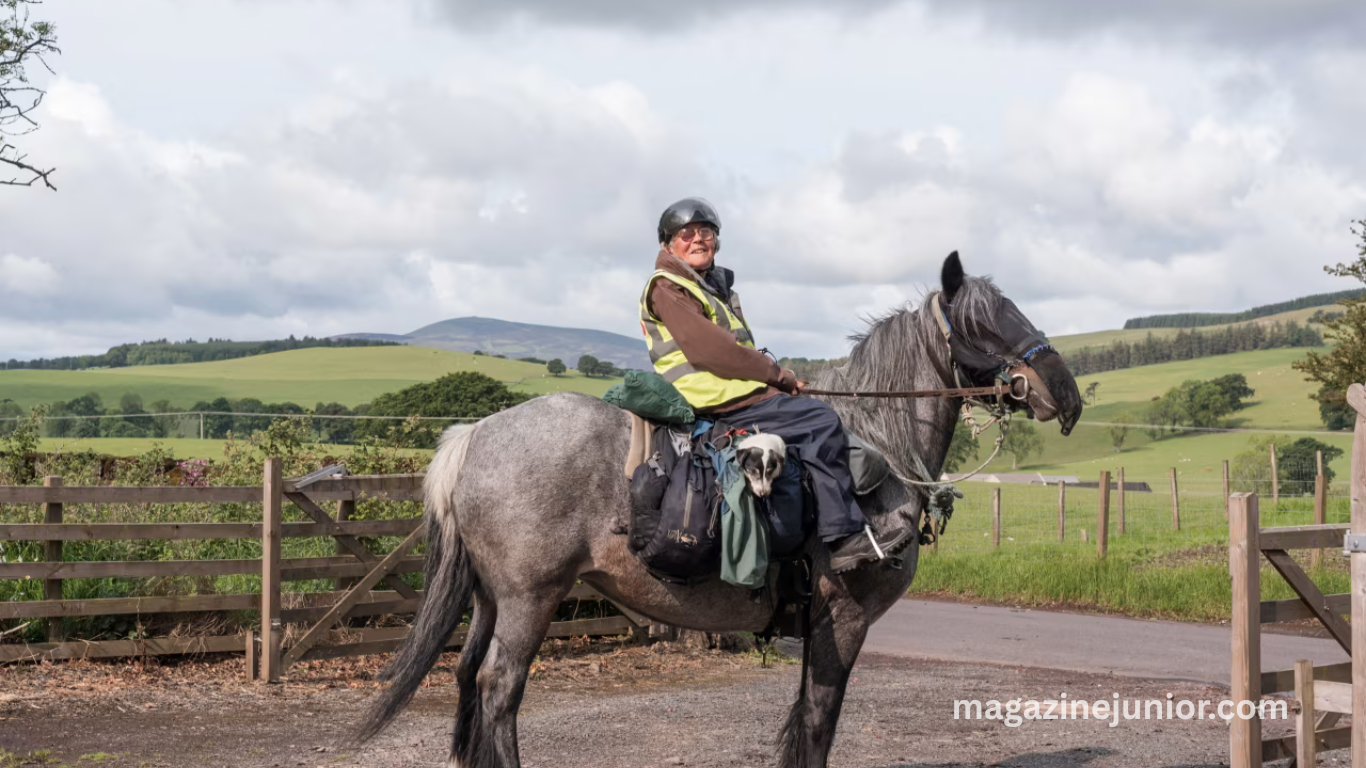
Nestled in the rolling landscapes of Northern England, the inspiring saga of an 84‑year‑old woman riding her pony through Britain has captured national attention and stirred deep reflection. Jane Dotchin, a determined octogenarian with a storied history of treks, has made this symbolic journey annually for over half a century. Her story underscores the enduring human spirit, the beauty of tradition, and the growing tension between age, adventure, and safety.
Her annual pilgrimage from her northeastern home to the Scottish Highlands spans roughly 600 miles, traversed alongside her faithful pony, Diamond, and her Jack Russell companion, Dinky. Each year brings new trials unpredictable weather, treacherous terrain, and evolving societal concerns. As Jane confronts her own physical limits, her journey becomes a poignant testament to independence, determination, and the shifting nature of rural Britain.
This episode holds a wider meaning: it reflects on aging, personal agency, and community values in modern times. Amid admiration, concern is rising how does one balance the inspirational with the impractical? With her 51st journey drawing to a possible end, this tale makes one ponder the crossroads of courage, compassion, and common sense.
A Lifetime of Extraordinary Journeys
Jane Dotchin’sDotchin’s odyssey began over 50 years ago with a solo trip to visit a friend in Bristol—on her stallion. She traversed nearly 300 miles to the south, igniting a lifelong passion for long-distance travel under her own power. That maiden trip transformed into a decades‑long ritual, weaving through Britain’s countryside and into collective memory.
Year after year, regardless of weather or global crises, Jane has mounted Diamond and set forth. In 2001, during the foot‑and‑mouth outbreak, she adapted—switching to her bicycle—demonstrating resourcefulness and unwavering resolve. Her journey is not just physical but emblematic of adaptability and grit amidst adversity.
Confronting Physical Challenges
At 84, Jane faces mounting physical hurdles. Two knee replacements, a hip implant, partial blindness, and the natural wear of aging limbs take their toll. These challenges manifested vividly this year; she turned back about 100 miles shy of her destination, unable to sustain her usual pace. The toll is undeniable.
Yet Jane remains resolute. She acknowledges the struggle: “”Now it’s my limbs.”” Still, she persists—packing light, relying on simple meals like porridge and cheese-laden oatcakes, and using a gate for assistance mounting Diamond each morning. Her vulnerability coexists with valor.
The Trio: Pony Diamond and Dog Dinky
Diamond the Pony and Dinky the Jack Russell are more than mere companions—they’re-they’re vital partners. Diamond carries the saddlebags and navigates the terrain. Dinky provides companionship, tucked safely in those bags. They form a cohesive team, showing an almost familial bond rooted in loyalty and trust.
Their presence enhances the journey’s charm and complexity. Diamond’s sure-footedness on moorland and roads comes from years of experience, mirroring Jane’sJane’s resilience. Together, this unlikely trio traverses fields, climbs hills, and confronts traffic.
Community Reaction: Admiration and Alarm
Public reaction to Jane’sJane’s journey is polarized. Many cheer her bravery—locals greet her with hot drinks, offer shelter, and track her progress. In Connel, Scotland, a farmer named Rab Black says, “I would love to see her again,” exemplifying the warmth she inspires.
Yet concern grows, too. Some friends fear she’s risking her health. Comments include sisterly admonishment” Some say I I’m brave; my sister thinks I I’m an idiot”—reflecting emotional conflict. Rumors of “not enough patience” on the road and safety issues complicate public opinion.
Modern Threats on Rural Roads
Over the years, Jane’sJane’s journey has become harder due to modern challenges. Traffic has intensified, and drivers are less accommodating. We’ve entered an era where horses on highways seem anachronistic. Jane retorts, “Horses were on the road long before your cars,” pointing to lost respect.
Read More : The Move Toward One Rewards Plan for All Your Travel
Unpredictable weather wind, rain, and bogs remain formidable foes. Yet it’s the cumulative strain of age and infrastructure change that poses the gravest risk. Locked gates, unfamiliar drivers, and lack of roadside help can quickly escalate her adventure into peril.
Encounters with Royalty and Kind Strangers
Jane’sJane’s treks have also intersected with serendipity. She unknowingly met Queen Camilla near Balmoral, mistaking her for a fellow dog walker. Only later did she realize the encounter’s significance, even staying in the royal holiday cottage. This anecdote reflects the spontaneous charm of her journey: everyday kindness sprinkled with royal happenstance.
wsj.com
Kindness from strangers is a recurring theme. From sheep‑shed hospitality to log‑store shelters, locals offer shelter during storms. This communal goodwill symbolizes a fading rural generosity that Jane both relies on and sustains.
The Psychological Dimensions: Determination and Identity
Jane’sJane’s journey is not purely physical it’s deeply psychological. For decades, this annual ordeal has shaped her identity. It offers continuity, purpose, and self-reliance. Her nomadic spirit persists despite physical decline; the road remains her pulse.
But this year’s premature turn‑back highlights fragility. Is it time to retire the tradition? Friends mull over the risk, torn between admiration and alarm. The question lingers: should some boundaries guide bravery, especially for the elderly?
What Lies Ahead: An Uncertain Legacy
As Jane contemplates whether this will be her final trek, the national gaze watches. Will she embark once more after two new knees? Supporters hope so, acknowledging that even if she does, the world she rides through has changed irreversibly.
Her uncertainty opens discourse on elder well-being, adventure, and autonomy. It challenges us to reconcile admiration with protection. Whatever her decision, Jane Dotchin’sDotchin’s legacy is secure: a testament to courage, community, and the value of an indomitable heart.
Frequently Asked Questions
What inspired Jane Dotchin to start this trek tradition?
Her first journey, riding to Bristol with her stallion in the early 1970s, ignited a passion for exploration and self-reliance.
How long is each annual journey?
The trip spans about 600 miles, typically covering the route over seven to eight weeks.
What are Diamond and Dinky’s Dinky’s roles?
Diamond the pony carries Jane and her provisions through varied terrain; Dinky the dog travels in saddle bags, providing companionship.
Why did Jane stop short this year?
Age-related challenges knee pain, limb fatigue forced her to halt about 100 miles shy of Scotland.
Has she faced serious danger?
She’s battled harsh weather, muddy bogs, traffic, and a few accidents—including a broken wrist after an animal collision.
Have authorities intervened?
There’s no formal restriction from authorities, but public concerns about road safety and her well-being have escalated.
Will this be her final trek?
Jane is undecided. Scheduled knee surgeries may enable a comeback, but she acknowledges the possibility of retirement.
Why does this story resonate?
Her journey represents timeless themes of independence, aging with purpose, and the tension between personal freedom and societal care.
Conclusion
Jane Dotchin’sDotchin’s remarkable journey spanning over fifty years and 600 miles with Diamond and Dinky has become a symbol of grit, identity, and community. As physical limits press in, Britain watches with mixed awe and concern. Her story weaves inspiration with caution, underscoring the complexity of aging, tradition, and autonomy.